
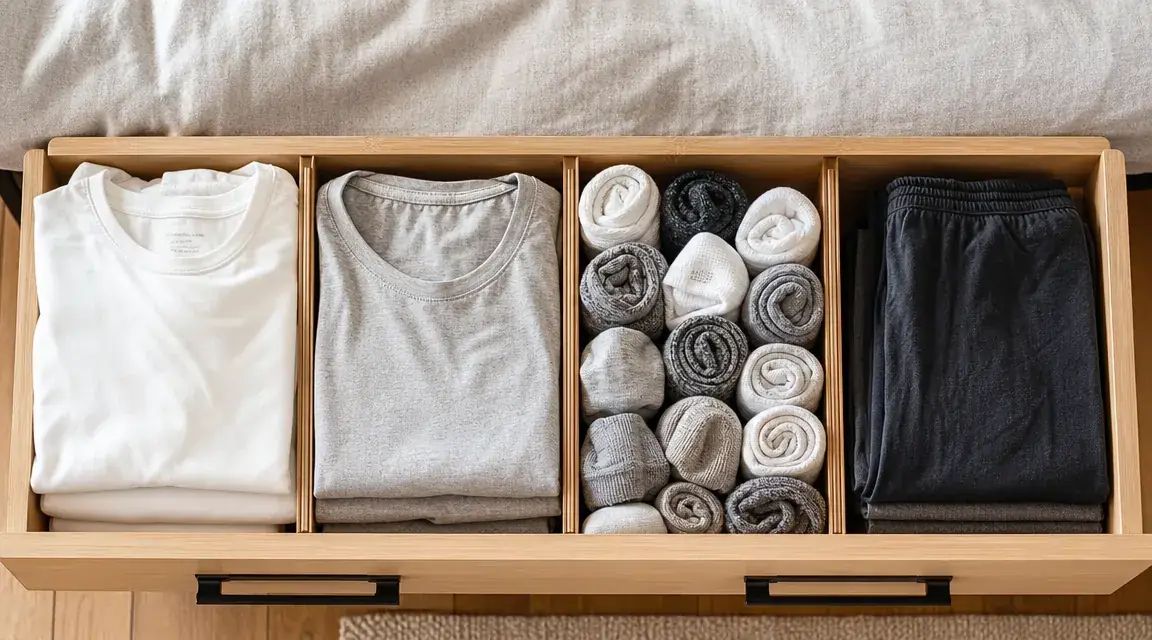
My first dresser drawer in my own apartment lasted about three weeks before it became a chaos pile. T-shirts jammed behind underwear. Gym socks mixed with dress socks. I would open that top drawer every single morning and immediately feel a small wave of annoyance. I tried folding everything Marie Kondo-style, but without anything holding the sections in place, everything migrated to the center of the drawer by day four. The problem was never the folding technique. It was the lack of physical barriers.
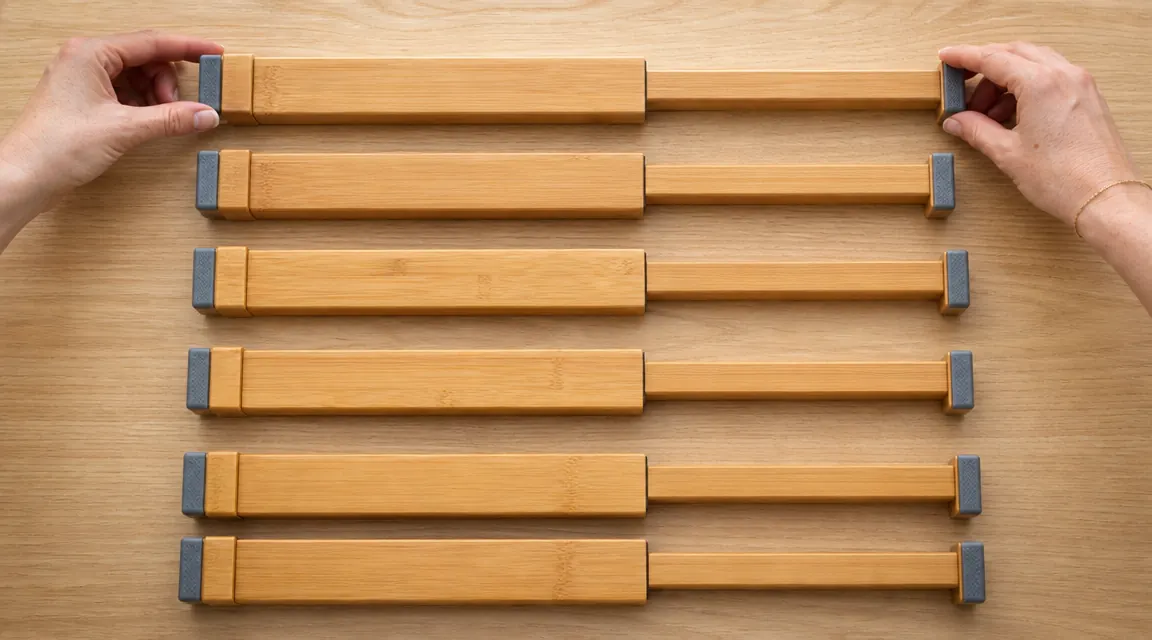
Spring-loaded bamboo drawer dividers solve that problem directly. You press them against the drawer walls, the internal spring holds them in place with no tools and no hardware, and suddenly every section stays exactly where you put it. The Fabsome bamboo dividers I use are a 6-pack that adjusts from 12.5 to 17 inches deep and stand 4.65 inches tall. That height is high enough to keep folded clothes from flopping over the top while still being short enough that the drawer closes with room to spare. This guide walks through the full process of measuring, planning, installing, and loading your drawers so the organization actually sticks.
If your drawers slide back into chaos within a week, the problem is no physical barriers. Here is the fix.
Fabsome bamboo drawer dividers are a 6-pack, adjust from 12.5 to 17 inches, and press in without tools. Rated 4.6 stars across 891 reviews. Check today's price before buying the wrong size.
Amazon Check Today's Price on Amazon →Step 1: Measure Every Drawer Before You Buy
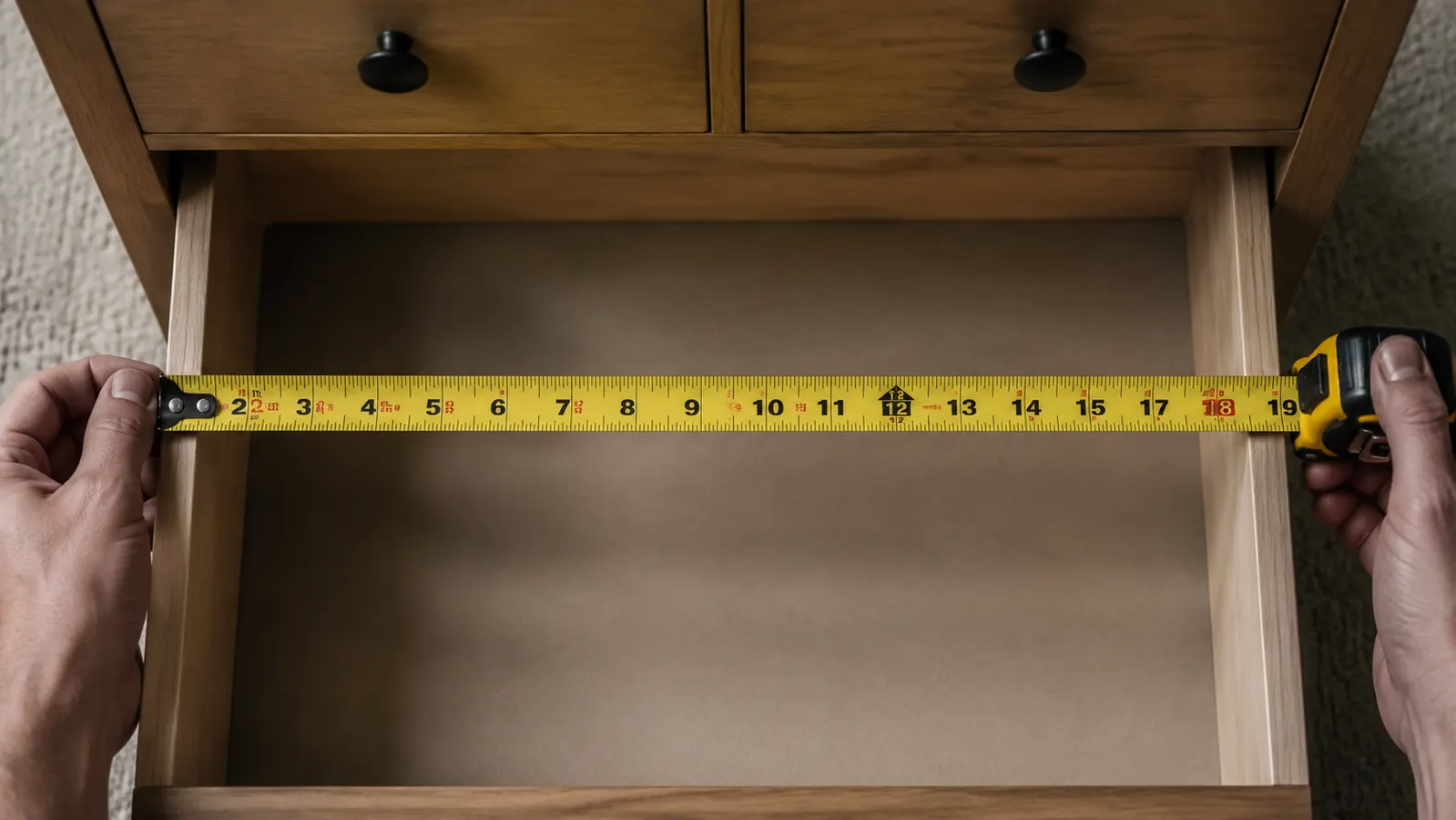
Bamboo dividers are not universal. The Fabsome 6-pack spans 12.5 to 17 inches in the depth direction. That covers most standard dressers (IKEA HEMNES is about 16.5 inches deep, IKEA MALM is about 19 inches deep and will NOT fit). Before ordering anything, pull out your tape measure and check the interior depth of each drawer you want to organize. Depth means front-to-back, not side-to-side. The dividers run perpendicular to the way you pull the drawer open, so they create left-right sections.
Also measure the interior height of the drawer cavity itself. You need at least 5 inches of clearance, ideally 5.5 inches, for the 4.65-inch dividers to sit comfortably without getting jammed when you close the drawer. Finally, note the interior width side-to-side. That tells you how many dividers will fit. A typical 30-inch-wide dresser has two drawers side by side, each about 14 inches wide internally. You can fit two dividers in a 14-inch-wide drawer to create three sections. A wider 20-inch drawer can hold three dividers to make four sections.
Write these numbers down. Sounding extreme? I have returned two sets of organizers in my life that I bought without measuring first. It is not worth the return shipping hassle.
Step 2: Empty the Drawer Completely and Sort What You Find
Resist the urge to just shove dividers into a half-loaded drawer. You need everything out so you can assess what you actually have. Dump the whole drawer onto your bed. Sort into piles by category: t-shirts, dress shirts, workout tops, socks, underwear, sleep clothes, whatever belongs in that drawer. Do not skip this step even if you think you know what is in there. I have found three lone gloves, a phone charger from 2019, and a tube of hand lotion in drawers I thought were just clothes.
While everything is out, wipe down the interior of the empty drawer with a damp cloth. Bamboo is a natural material and the soft foam ends grip better against a clean surface. A quick wipe also reveals any rough spots on the drawer walls that might affect how the spring holds. Most drawers just need a dust pass, but if yours have a sticky residue from old shelf liner, peel that off now. The dividers work best against bare wood or a clean painted surface.
Step 3: Plan Your Sections on Paper Before Installing
This takes about three minutes and prevents the most common frustration with bamboo dividers: installing them and then realizing the sections are the wrong size for what you want to store. Look at your sorted piles and think about volume. A pile of 15 rolled socks needs about 3 inches of width. A stack of 8 folded t-shirts needs about 6 inches. Pajamas take up more space than gym shorts. Sketch a rough layout on a notepad. Decide how many sections you need and roughly how wide each one should be.
For a standard sock-and-underwear top drawer (14 inches wide by 16 inches deep), I use two dividers to create three sections: left third for underwear, middle third for socks, right third for miscellaneous small items like a money clip or folded handkerchiefs. For a t-shirt drawer (14 wide by 16 deep), I use one divider down the center and file-fold shirts vertically in each half, short-sleeved on the left and long-sleeved on the right. Every drawer gets a different layout because every category has different storage needs.
Step 4: Install the Bamboo Dividers Using Spring Tension
Installing Fabsome dividers takes about 30 seconds per divider. Hold the divider with both hands, one hand on each end. Compress it slightly by pushing the ends toward the center, position it across the width of the drawer at your planned location, and release. The internal spring pushes the foam-tipped ends outward against the drawer walls. That is all. No tools, no screws, no adhesive.
A few technique notes. First, make sure the flat face of the divider is facing the direction you want the section boundary to be, not angled. A misaligned divider creates a trapezoidal section that wastes space. Second, if the divider feels loose after release, the drawer may be too wide for that particular compressed length. Try extending it a bit by twisting the end cap. The Fabsome design has a small rotational adjustment at each end to fine-tune the length. Third, the foam ends need to make full contact with the wall surface, not catch on a corner or groove. Press the end flat against the wall before releasing.
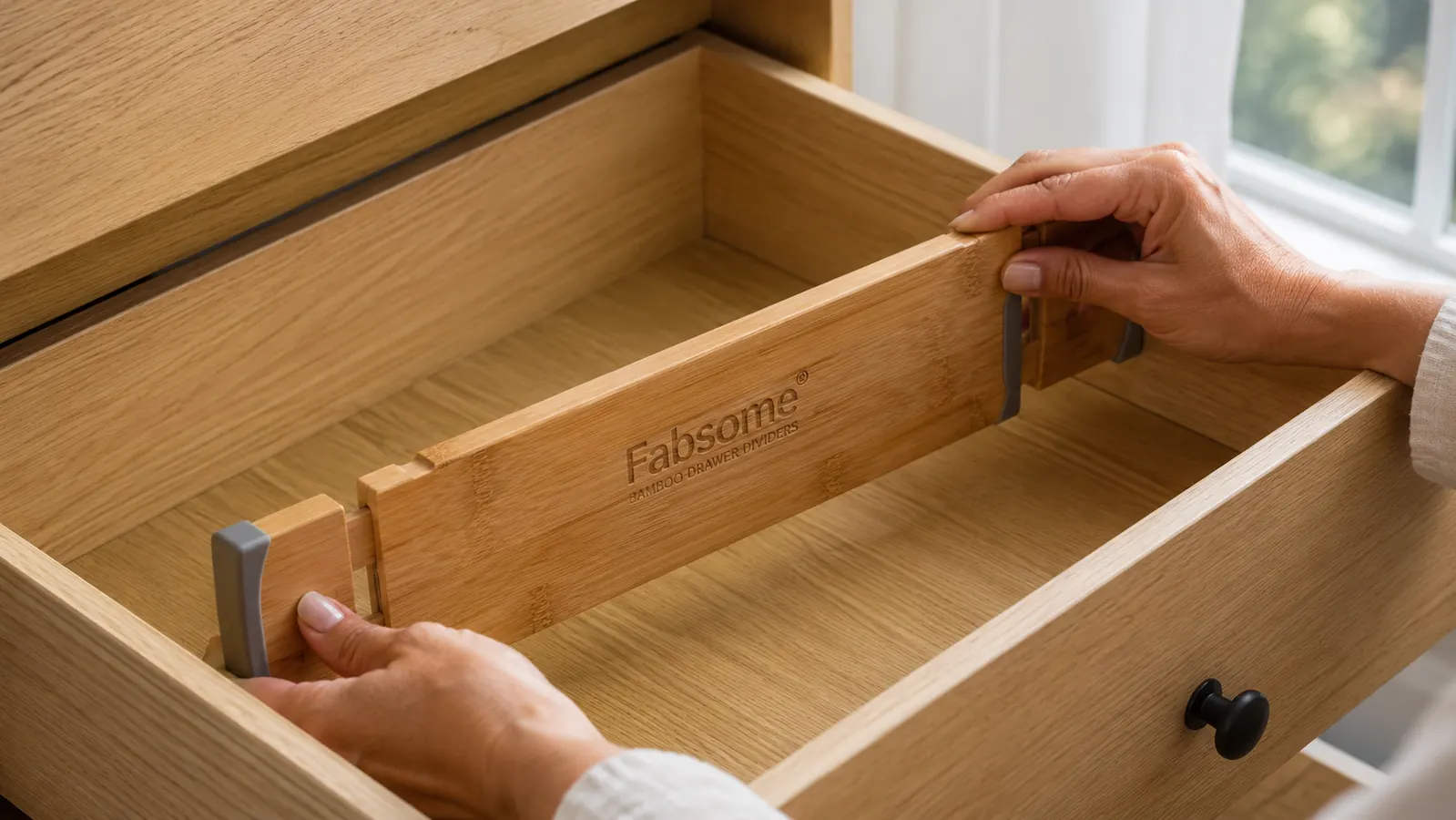
Once all your dividers are in, try opening and closing the drawer three times at normal speed. Everything should stay in place. If a divider walks forward or backward when the drawer closes, it means one of the foam ends is not fully seated. Pop it out and reinstall with both ends flush against their walls before re-releasing the spring.
Step 5: Load and Fold Using Vertical Filing for Clothes
How you load the sections is just as important as where the dividers go. Stacking clothes in horizontal piles defeats the purpose because you can only see what is on top. The method that keeps everything visible and accessible is vertical file-folding: fold each garment into a rectangle, then stand it on edge inside the section rather than laying it flat. This way you see every item at once when you open the drawer, just like files in a filing cabinet.
For t-shirts, fold the shirt in half lengthwise, then fold the bottom up two-thirds of the way, then fold the remaining third down over it. You get a neat rectangle about 4 inches wide and 7 inches tall that stands upright. Load these side by side in the section, spines facing up. For socks, roll them into a tight coil rather than folding them inside out, which stretches the elastic. A rolled sock pair takes up about 2.5 inches of width and sits steadily in a section. For underwear, fold in thirds lengthwise then fold the package in half. It stands upright at about 3 inches wide.
The dividers do not do the organizing. You do. But without the dividers, the organization evaporates the first time someone digs for something in a hurry. The dividers are what makes the system self-resetting.
Load each section to about 80 percent of its capacity. Cramming sections to the brim means items get displaced when you pull one out. Leave a small gap so you can reach in and retrieve items without disturbing the neighbors. If a section is overflowing, you probably have too much of that category, not too few dividers. This is the moment to reassess whether you actually need 24 pairs of socks.
What Else Helps
Bamboo dividers create the sections. A few other habits and tools lock in the result long-term.
Label the sections if multiple people use the dresser. A small piece of painter's tape with a written label takes about ten seconds and prevents the wrong items from landing in the wrong section. This matters for kids' dressers in particular, where a six-year-old is not going to remember that socks go in the left section without a cue.
Do a drawer reset every four to six weeks. Sections drift slightly as clothes get rotated through laundry. A reset means taking five minutes to re-file everything back to vertical and checking that the dividers are still seated properly. This is the maintenance cost of any drawer organization system. Bamboo dividers make the reset faster because the sections are already defined and you are just re-ordering within them rather than figuring out where everything should go from scratch.
Keep related items in the same zone across drawers. If the top drawer is the everyday drawer, the second is the workout drawer, and the third is the seasonal-plus-extras drawer, that hierarchy should be obvious without opening every drawer. Put the things you reach for most at a comfortable height. This sounds obvious but it is the detail that prevents morning frustration. The 30 seconds you spend not hunting for a sock at 7 a.m. is a real quality-of-life win.
For more on why bamboo dividers outperform the fixed-size plastic tray alternatives, see the full breakdown at 10 Reasons Bamboo Drawer Dividers Beat Plastic Organizer Trays. If you want a detailed review covering one year of use across three different drawer types, the Fabsome Bamboo Drawer Dividers long-term review covers the durability findings honestly.
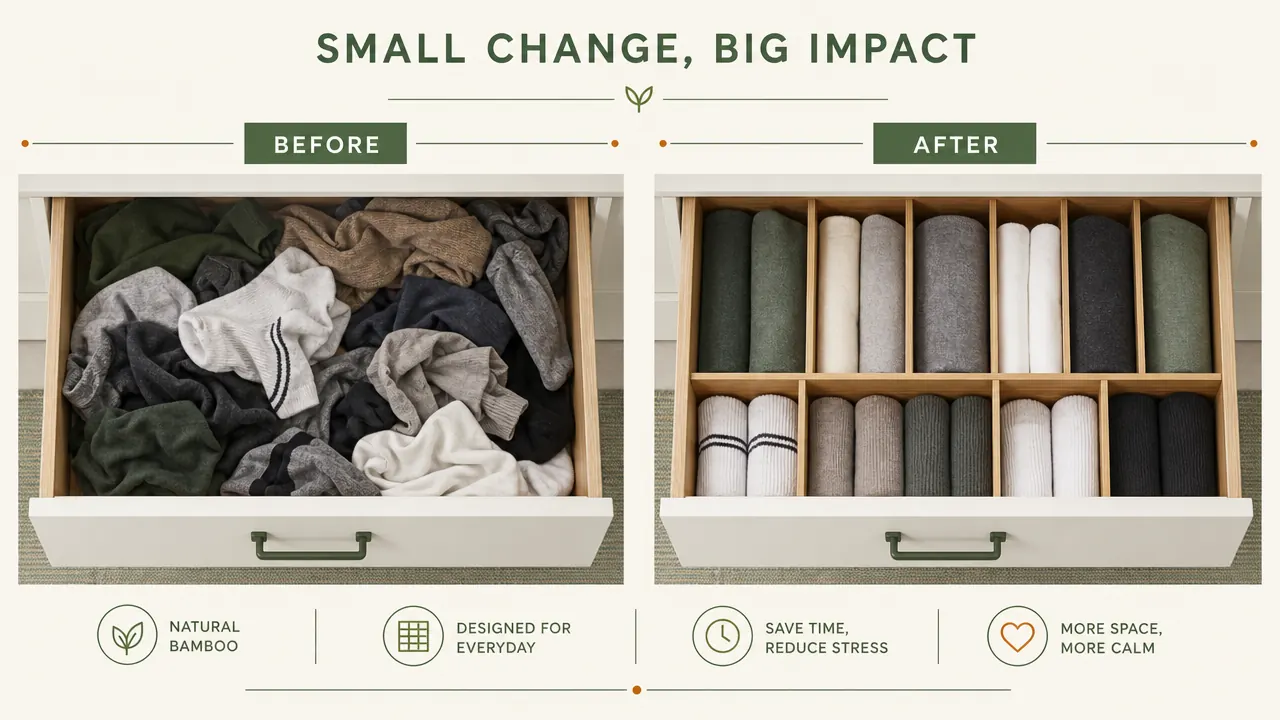
Your dresser is three sections away from staying organized without daily effort.
Fabsome's 6-pack of spring-loaded bamboo dividers fit drawers 12.5 to 17 inches deep, require no tools, and hold their position even when the drawer slams. Check today's price on Amazon before stock changes.
Amazon Check Today's Price on Amazon →