
I have been organizing drawers since my first studio apartment in 2011, and I have tried everything from repurposed cardboard boxes to expensive acrylic tray sets. When I moved into my current house in 2024 and finally had a real dresser with real drawers, I decided to test Fabsome's bamboo drawer dividers properly. Not a quick setup-and-forget. A real test across three different drawers with different contents, different widths, and different daily use patterns, over twelve full months.
The short version: these are the best spring-loaded dividers I have used, with one significant caveat about fit. If your drawers fall in the 12.5-to-17-inch depth range, they will work well for a long time. If they do not, stop reading and look elsewhere. Everything else about them is genuinely good.
The Quick Verdict
Excellent spring-loaded bamboo dividers for drawers that fit the depth range. Durable, grip well, and look far nicer than plastic alternatives.
Amazon Check Today's Price →If your drawers measure between 12.5 and 17 inches deep, these are the bamboo dividers to get.
The Fabsome 6-pack includes spring-loaded slats with soft foam ends that grip without scratching. Rated 4.6 stars from over 890 buyers.
Amazon Check Today's Price on Amazon →How I've Used Them Over Twelve Months
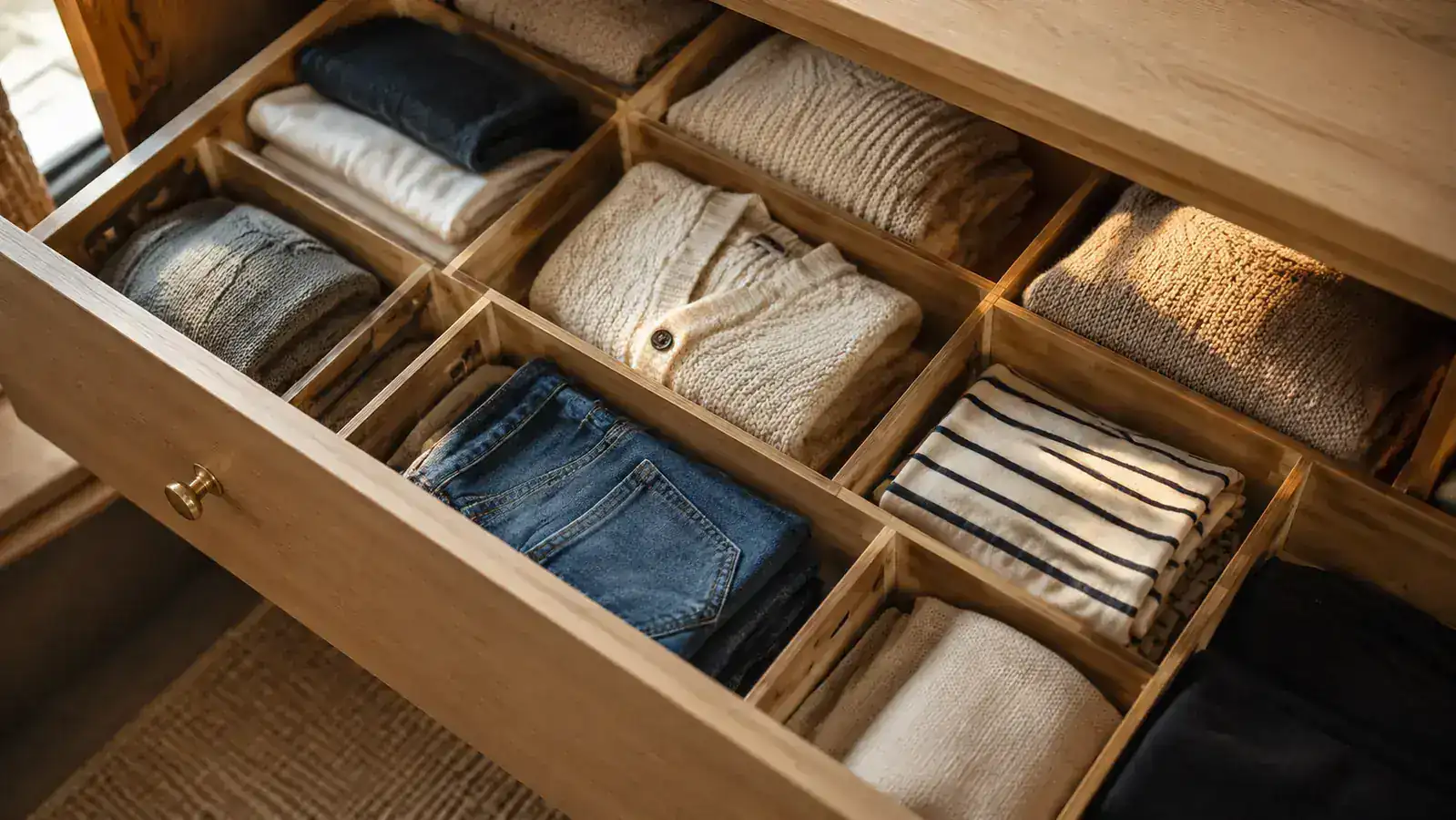
I set up three separate installations across different rooms at different times of year. First was my master bedroom dresser, a standard 30-inch wide piece with four drawers, each measuring about 14.5 inches deep front-to-back and 26 inches wide. I installed four Fabsome dividers in the top drawer to separate T-shirts, workout tops, tank tops, and lounge wear. That drawer sees daily use. Something goes in or out of it every single morning.
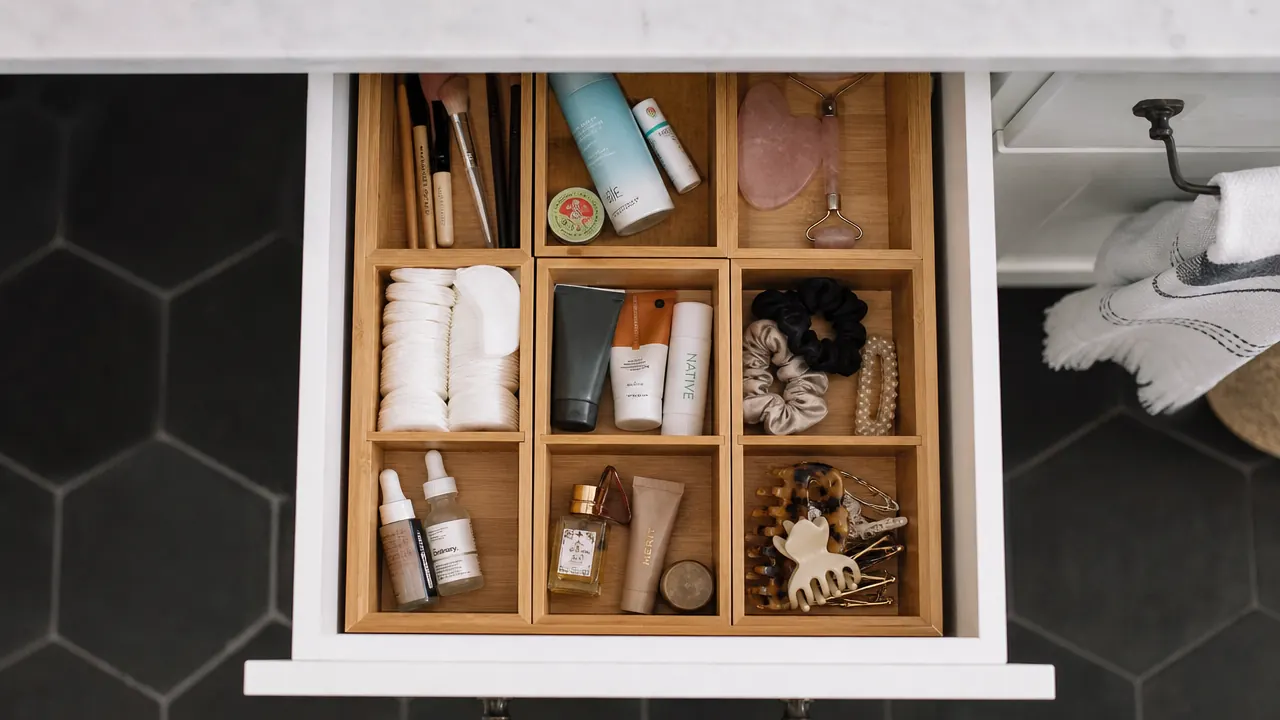
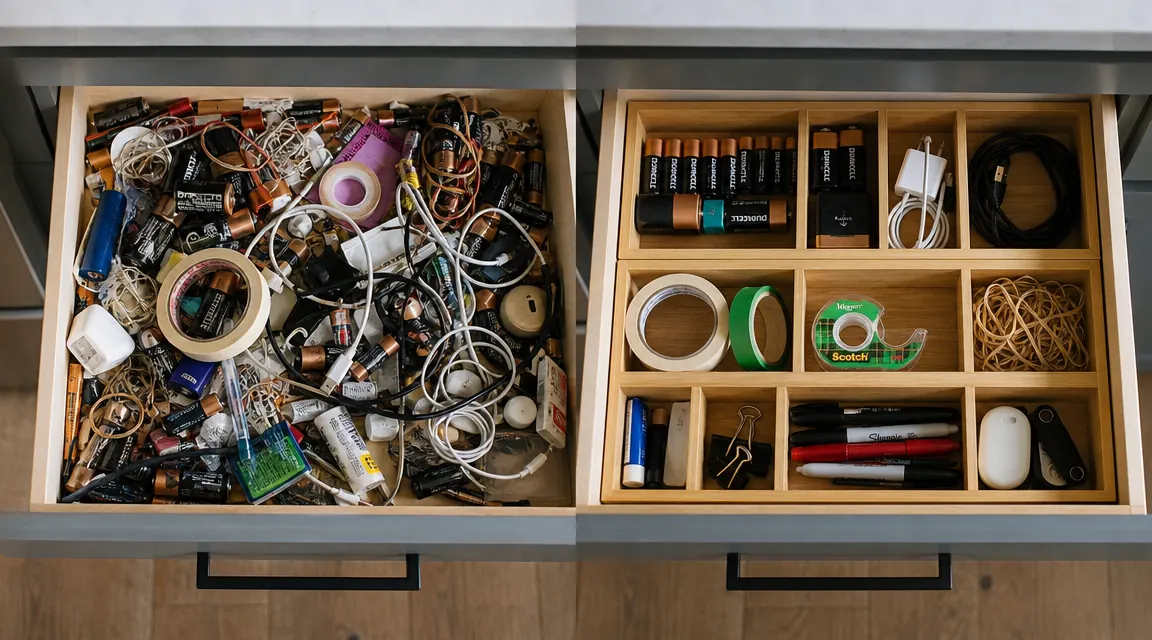
Three months later I tackled the kitchen junk drawer, a 15-inch-deep, 21-inch-wide drawer that had devolved into a pile of tape measures, dead batteries, rubber bands, pens that may or may not work, and a single playing card from a deck I no longer own. I put two Fabsome dividers across the width to create three columns. About eight months after that, I added two more to a bathroom vanity drawer, 13 inches deep, 18 inches wide, holding cotton rounds, lip balm, hair ties, and a small collection of spare ponytail holders.
All three installations are still in place today. The dividers in the T-shirt drawer have been nudged, re-angled, and occasionally knocked loose when someone pulls out a shirt too aggressively. They have always snapped back into position or been trivial to reset. The junk drawer dividers have not moved once. The bathroom ones are the most recent addition and are holding exactly as expected.
The Spring Mechanism: How It Actually Works
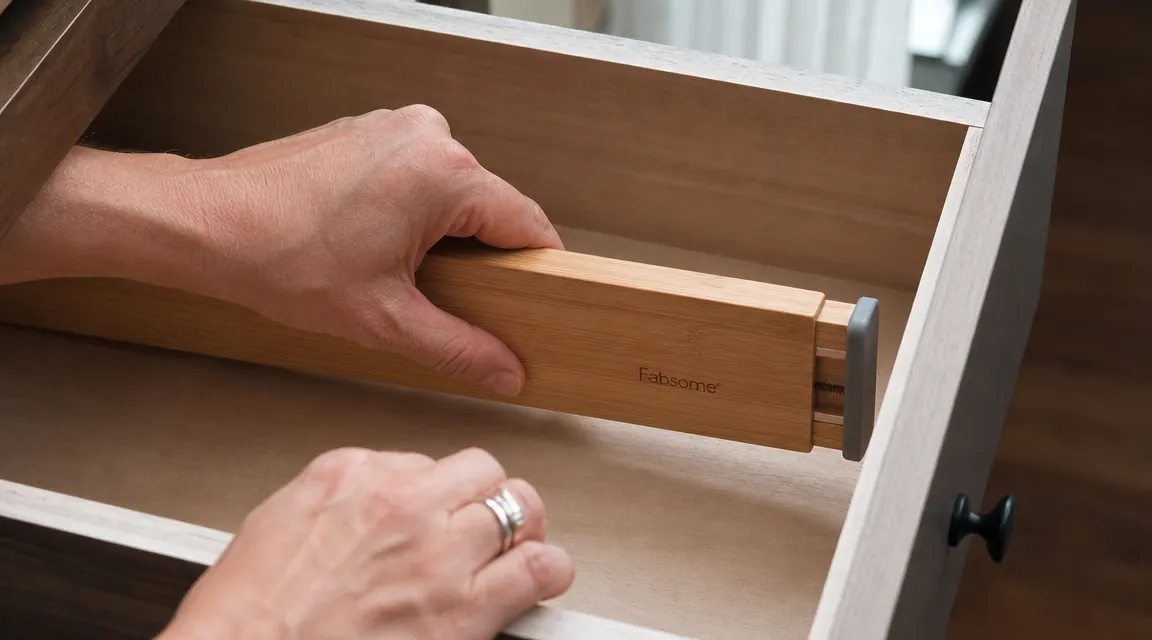
Each Fabsome divider is a solid bamboo slat, 4.65 inches tall, with a spring-loaded telescoping section that extends the total length anywhere from 12.5 to 17 inches. The ends are capped with soft foam pads that press against the front and back interior walls of the drawer. You compress the divider, set it in place, release, and the spring tension holds it there.
The spring mechanism is noticeably stiffer than cheap plastic dividers I have used in the past. That stiffness is a feature. Flimsy spring tension is why plastic dividers slowly migrate across the drawer over weeks of use. The Fabsome mechanism stays put. I tested this deliberately in the T-shirt drawer by pulling items out at angles and pushing them back in roughly. After three months of daily rough handling, the dividers had shifted a total of maybe half an inch. A quick nudge reset them in under five seconds.
The foam end caps are worth mentioning separately. They grip painted drawer interiors and raw wood equally well. No scratching on the painted MDF of my dresser, no marks on the unfinished pine inside my kitchen junk drawer. After twelve months I can see slight compression marks on the foam from where they press against the wall, but the foam has not degraded or torn. The caps are glued on, not friction-fit, so they have not slipped off during normal use.
After twelve months of daily use in a T-shirt drawer, the Fabsome dividers had shifted maybe half an inch total. A five-second nudge reset them.
The Fit Problem You Need to Know Before Buying
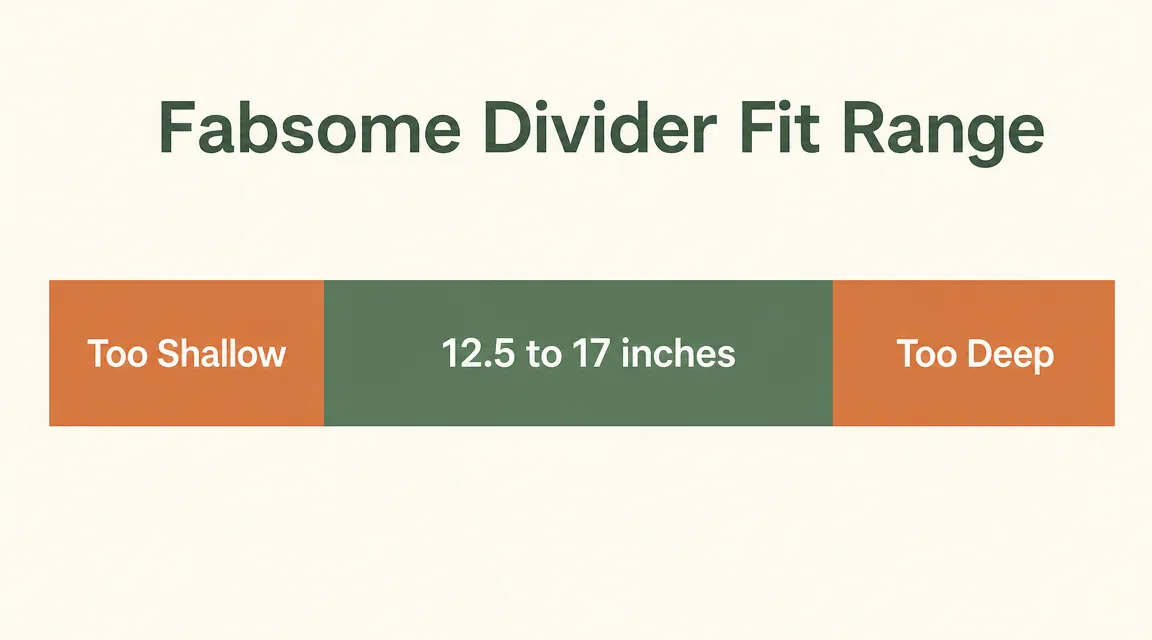
The single most important thing I can tell you about these dividers is that the 12.5-to-17-inch depth range is a hard limit, not a suggestion. Front-to-back drawer depth is the measurement that matters. The spring extends the divider lengthwise, so it is pressing against the front wall and the back wall of the drawer, not the side walls.
My three drawers measured 14.5 inches, 15 inches, and 13 inches. All three fall comfortably in range. But I also have a bathroom linen cabinet with drawers that are 11 inches deep. These dividers do not fit there, full stop. A 17.5-inch deep drawer would also be a miss. Measure your drawer depth with a tape measure before you order. Do not guess based on how the drawer looks. Drawer depth is notoriously hard to eyeball accurately.
If you have a mix of drawer depths in your home, buy one pack first and test in your target drawer before committing to multiples. The 6-pack is a good value for a single dresser where all drawers are the same depth, but ordering three packs for a whole room without verifying dimensions first is how you end up with a pile of returns.
Performance by Drawer Type
The clothing drawer is where these dividers genuinely earn their price. Folded T-shirts have a tendency to topple into neighboring sections the moment someone pulls one from the front of the stack. With dividers, each section is its own contained column. After twelve months, I still know exactly where my black workout tops are versus my grey lounge shirts, and neither pile has invaded the other's territory. That kind of long-term stability used to require velvet-lined acrylic trays that cost three times as much and only fit certain drawer sizes anyway.
The junk drawer performance surprised me. I expected the heavier, more irregular contents to stress the dividers or cause them to shift, but they have not moved at all. A junk drawer sees less daily use than a clothing drawer, which probably helps. The contents also do not create sideways pressure the way folded clothes sometimes do when compressed. Two dividers across a 21-inch-wide drawer create three sections about 7 inches wide each, which is enough for a battery zone, a tape-and-scissors zone, and a miscellaneous small items zone. Exactly what I needed.
The bathroom vanity drawer is the newest installation, so I have only six months of data on it. So far, no issues. Small items like cotton rounds and hair ties do not create any mechanical pressure on the dividers, so I expect this installation to outlast the others in terms of stability.
The Bamboo Material After One Year
Bamboo is a solid choice for this product. The slats are smooth, splinter-free, and have not warped, cracked, or discolored after twelve months. I keep my dresser in a room that gets humid in summer and dry in winter, which is a reasonable stress test for wood-based materials. No warping visible. The finish is a light natural lacquer that has held up without peeling.
Plastic dividers at a similar price point show wear much faster. I have had plastic versions yellow slightly after six months, and the spring mechanisms on cheaper versions tend to weaken after a year of compression. Neither of these issues has appeared with the Fabsome bamboo version. The material also looks better, which matters if you care about what your drawers look like when they are open.
What I Would Change
The dividers are 4.65 inches tall, which is perfect for a clothing drawer with stacked folded garments, but too tall for some shallower vanity drawers where the drawer has only 3 or 4 inches of interior height. My bathroom vanity drawer is 4.5 inches deep, so the dividers stick up a tiny bit above the drawer opening. That does not affect function but it does mean the drawer does not close with the same seamless flush look. A shorter version, around 3.5 inches tall, would fill a gap in the product line.
I also wish the pack included one or two shorter dividers in the same spring range for subdividing a large section into smaller ones. Right now all six dividers in the pack are identical. A half-length option would let you create a primary section and a secondary sub-section within a single zone. That is a small complaint and would probably require a separate SKU, but it is the first thing I would ask the product team for.
What I Liked
- Spring mechanism is noticeably stiffer than plastic alternatives, stays put with daily use
- Foam end caps grip both painted and raw wood without scratching after 12 months
- Bamboo material shows no warping, cracking, or discoloration after one year
- Works across clothing drawers, junk drawers, and bathroom vanity drawers
- 6-pack provides enough dividers for one full dresser when all drawers share the same depth
- Looks far better than plastic when the drawer is open
Where It Falls Short
- Hard fit limit of 12.5 to 17 inches front-to-back depth, no workaround outside that range
- 4.65-inch height sticks slightly above very shallow drawer openings (3.5 to 4-inch deep drawers)
- All six dividers are the same length, no shorter sub-divider option in the pack
- Spring tension strong enough that compressing them for installation requires two hands
How These Compare to Plastic Organizer Trays
I used plastic organizer tray sets in four previous apartments. The fundamental problem with fixed trays is that they are designed around the product team's idea of a standard drawer, not your actual drawer. Every set I owned had at least one tray that was a quarter inch too wide, or left a 2-inch dead zone along one edge that collected crumbs and escaped bobby pins. Spring-loaded dividers eliminate that problem entirely because they fill the drawer wall-to-wall regardless of width, and you position them wherever your specific contents require.
If your drawers fall in the 12.5-to-17-inch range, the Fabsome dividers are a better choice than plastic trays in almost every scenario. If you have a kitchen with very shallow spice drawers, or very deep storage drawers, plastic trays may actually be the more flexible option. For more detail on this comparison, see my article on bamboo drawer dividers versus plastic organizer trays.
Who This Is For
These dividers are ideal for anyone organizing a standard dresser with drawers in the 12.5-to-17-inch depth range. They are especially good for clothing drawers where sections need to stay separated under daily use. They also work well for junk drawers and bathroom vanity drawers. If you have been frustrated by plastic trays that do not fit your drawer dimensions, or by cheap spring dividers that migrate over time, the Fabsome version solves both of those problems. Renters will appreciate that no drilling, adhesives, or permanent modifications are required.
Who Should Skip It
If your drawers are shallower than 12.5 inches or deeper than 17 inches front-to-back, these do not fit, and there is no modification that changes that. Skip them and look for adjustable dividers with a different range. Also skip if your target drawer has very low interior height (under 3.5 inches), where the 4.65-inch slat height will protrude above the drawer edge. Finally, if you are organizing a kitchen drawer with large items like cutting boards or rolling pins, spring dividers in general are not the right tool. A better setup for that situation is a dedicated drawer organization system designed for oversized utensils. For a full step-by-step guide to setting these up correctly, see my guide on how to organize dresser drawers with bamboo dividers.
Measure your drawer depth first, then order with confidence if you are in the 12.5-to-17-inch range.
The Fabsome 6-pack gives you enough spring-loaded bamboo dividers for a full dresser. Soft foam ends grip without scratching. Bamboo builds durability into the material from the start.
Amazon Check Today's Price on Amazon →