
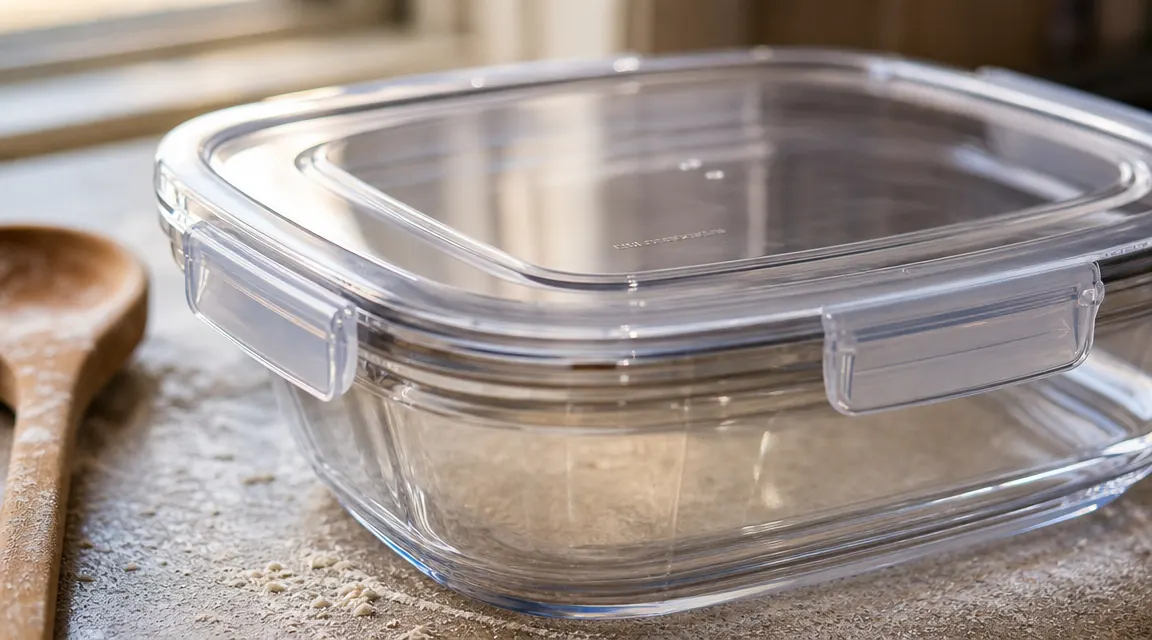
Here is the honest problem with the CHEFSTORY Amazon listing: the reviews are genuinely split in a way that should make you pause before clicking Buy. You will find a 5-star review that says the lid is airtight and excellent. You will scroll three reviews down and find a 1-star review that says the lid is broken on arrival and the clips feel cheap. Both reviewers are talking about the same product. The question is why the experience is so different, and what that means for whether you should order the set.
I have owned the CHEFSTORY 8-piece airtight canister set and I want to give you the version of this review that cuts through the noise. Not the long-term durability angle, not the "here is how I set up my pantry shelf" angle, but the specific thing that confuses most buyers before they commit: the four-latch lid system, how it actually works, why it frustrates some people and not others, and what you should know about it before the package lands on your doorstep. The CHEFSTORY containers are rated 4.6 stars across more than 6,600 reviews on Amazon, which is genuinely strong performance for a pantry canister set.
The Quick Verdict
The lid requires a learning curve that the listing does not warn you about. Once you get it, the seal is real. But you need to know what you are walking into.
Amazon Check Today's Price →Tired of bags that split and staples that go stale? The CHEFSTORY set solves both problems, once you learn the lid.
8-piece airtight canister set with four locking clips per lid, clear plastic walls for at-a-glance inventory, and a square footprint that fits more per shelf inch than round canisters. 4.6 stars, 6,600+ reviews.
Amazon Check Today's Price on Amazon →How I Tested These Containers
I bought two sets over about six months, intentionally at different points in my pantry organization process. The first set I ordered when I moved into a new apartment and wanted to convert my pantry from bags and boxes to uniform canisters in one purchase. The second set I bought for my mother, who has a deep kitchen cabinet (about 16 inches front to back) and had been asking about the best budget option for storing baking supplies. She bakes several times a week and needed containers she could grab and open quickly while her hands were floury. Her experience with the lid was very different from mine, and that difference turned out to be the most useful thing I can tell you.
I also read through about 80 Amazon reviews in the 1-star and 2-star range specifically, looking for patterns in what goes wrong. What I found is that the complaints cluster around two things: confusion about how the lid is supposed to work, and a subset of units where one or more clips arrive with less tension than they should. Understanding both of those problems will save you either a frustrating first week or an unnecessary return.
The Lid: Why the One-Star Reviews Exist
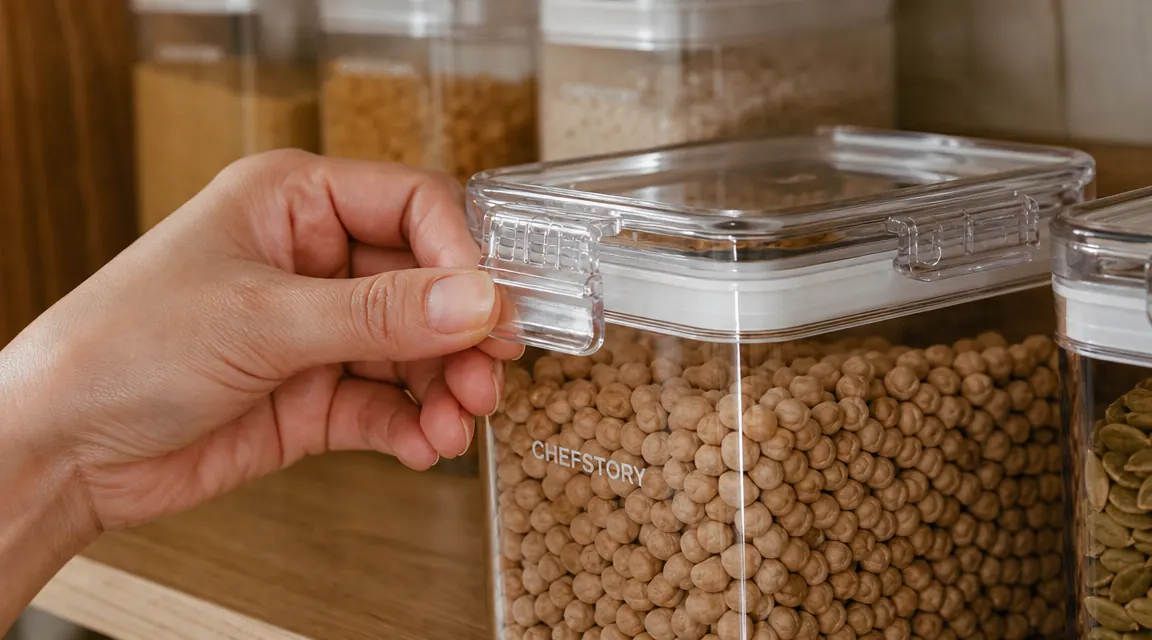
The CHEFSTORY lid has four clips, one on each side of the container. Each clip is a small hinged plastic tab that flips outward to open and snaps inward over a ledge on the container body to lock. When all four are locked, the silicone gasket inside the lid compresses against the container rim and creates the airtight seal. That is straightforward enough when you know it. The problem is that most people who buy a food storage container expect to press a button or press the lid down and hear it snap. The CHEFSTORY lid does not work that way. If you press the lid onto the container without engaging the clips, the lid sits on top but nothing is sealed. It will lift off with almost no resistance.
This is where a lot of the 1-star reviews come from. Someone receives the set, puts their flour in the largest canister, presses the lid on, and puts it on the shelf. A few days later they notice the flour has gotten a little stale, or they see a small bug has gotten in, or they just notice the lid lifts off with no resistance. They think the product is defective. The product is not defective. They were not engaging the clips. The listing photographs show the clips but do not explain the two-step process: place the lid, then flip each clip inward individually. If you know that going in, setup takes about fifteen seconds per container once and then you will never think about it again.
The second category of 1-star complaints is real: some units do arrive with clips that feel loose or that do not click firmly when latched. I have seen this in person. On the set I bought for my mother, one of the four medium containers had a clip that felt noticeably softer than the other three. It still latched and still sealed, but if you pressed on the lid after latching it, that one corner had slightly more give. If you are buying these and one clip feels off on arrival, that is a legitimate quality control issue. It does not affect every unit, but it is not rare either.
The lid is not broken. It just does not work the way most food storage containers work. Fifteen seconds to learn it, then you will never think about it again.
The Dishwasher Question Nobody Answers Directly
The CHEFSTORY listing says the containers are dishwasher safe on the top rack. I want to be more specific about what that means in practice. The container bodies are fine in the dishwasher. They come out clean and undistorted after repeated cycles. The lids are where you need to be careful. The silicone gasket ring is removable, and if you run the lid through the dishwasher with the gasket in place, high-heat cycles can deform the gasket over time. I wash the lids by hand with warm soapy water or I run them in the dishwasher with the gasket removed. The gasket snaps back in easily once it is dry. If you are the kind of person who puts everything in the dishwasher and forgets about it, you will likely be replacing the silicone rings within six months. They are not sold separately on the listing, which is a real gap in the product.
The containers also have a very faint plastic smell when you first open the set. It goes away within two to three days of leaving the containers open on the counter, but if you fill them immediately and seal them, the smell can transfer faintly to dry goods like oats or flour on the first fill. I recommend this: open the set, wash all containers with dish soap and warm water, let them air dry with the lids off for 24 to 48 hours, then fill and seal. Anyone who says their oats tasted like plastic almost certainly filled the containers the same day the package arrived.
Do You Actually Need All Eight Containers?
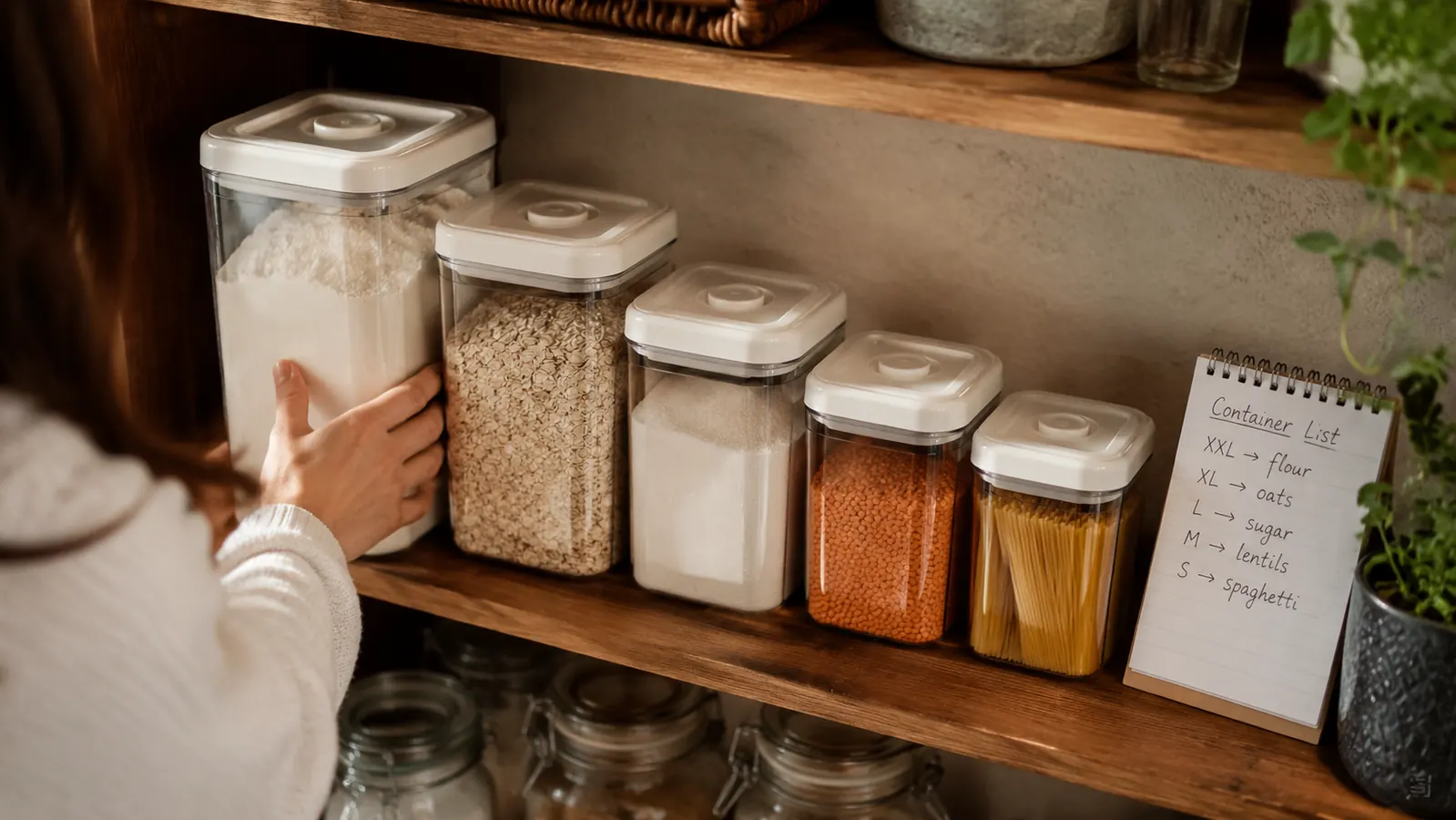
The 8-piece set includes two containers in each of four sizes. For most people with a standard rental pantry, the two extra-large containers are the most useful. Those hold about 12 cups each, which is enough for a 2-pound bag of rolled oats or most of a 2-pound bag of rice. The two large containers, at roughly 7.5 cups each, work well for granulated sugar and bread flour portions. The two medium containers are good for lentils, split peas, or dried pasta shapes like fusilli or penne. The two small containers are the ones I have the most mixed feelings about. At roughly 2.5 cups, they are too small for a full bag of anything except specialty items like chia seeds, poppy seeds, or ground coffee.
If your pantry primarily holds baking staples, two of those small containers will sit mostly empty unless you buy specialty grains or small-quantity spices. That is not a reason to skip the set, but if you find yourself wondering what to put in the small ones, the answer is: dried herbs in bulk, chia seeds, ground flax, or any ingredient you buy in small quantities but use often enough to want visible. If your cooking skews toward everyday staples over baking, you may actually wish the set had four large and four extra-large instead of the current distribution.
The Workflow Nobody Explains in Listicle Reviews
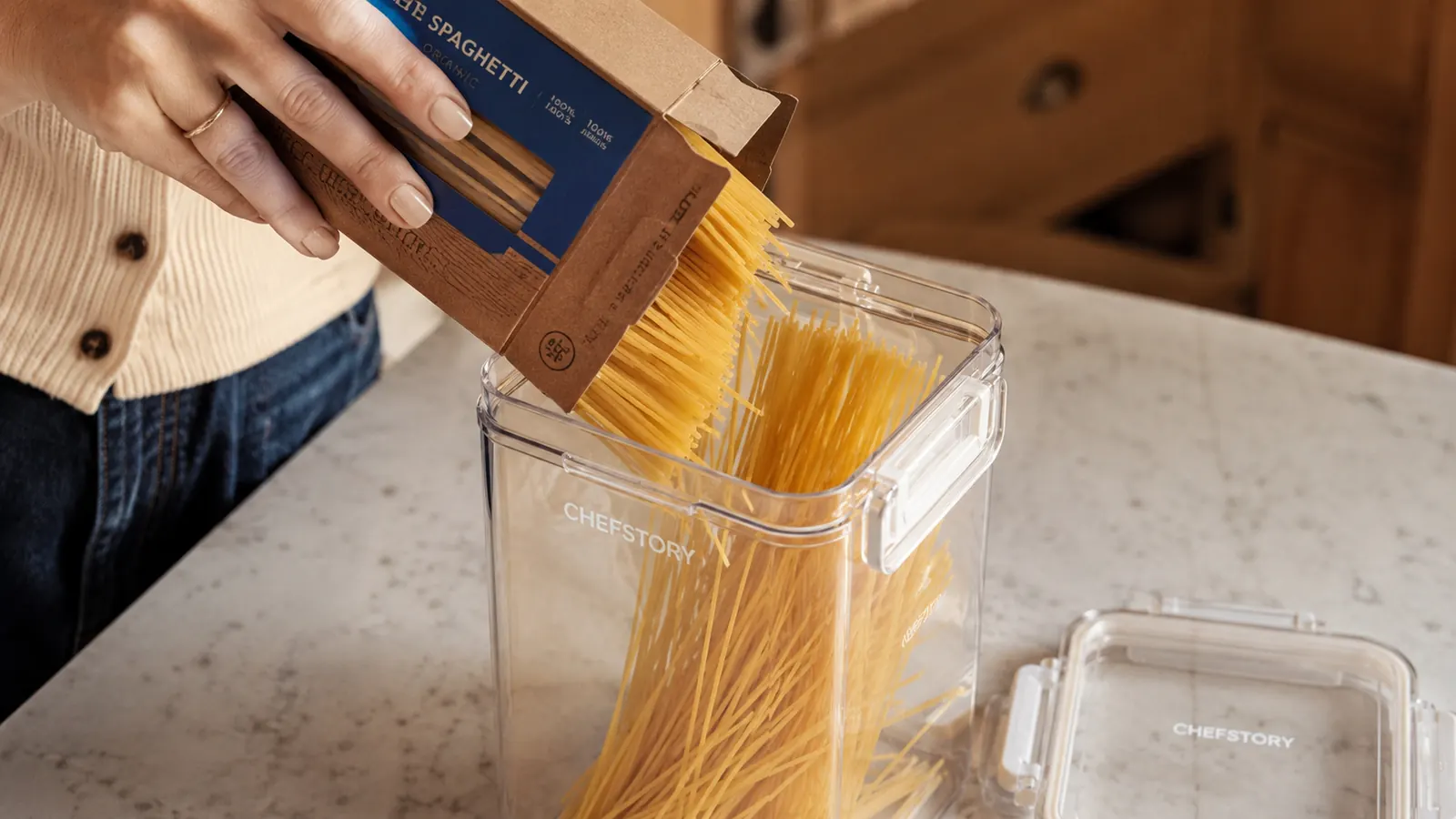
There is a practical step between "order containers" and "organized pantry" that most CHEFSTORY reviews skip over entirely, and it is the step where most people get frustrated: the decanting workflow. You cannot simply pick up a bag of flour and pour it into the container. A standard 5-pound bag of all-purpose flour contains about 18 cups of flour. The large CHEFSTORY container holds roughly 7.5 cups. If you pour without thinking, you will overflow the container before the bag is empty. You need to decide ahead of time whether you are doing a partial fill and keeping the remainder of the bag in your cabinet, or whether you are buying smaller quantities and filling containers completely.
I now buy 2-pound bags of flour specifically because they fit the large container with just a little headspace, and I keep one 5-pound backup bag unopened in my cabinet until I need it. That is a grocery habit change, not just a container change. If you are not willing to adjust how you buy staples, you will constantly be dealing with half-filled containers and orphaned open bags sitting next to them, which defeats a lot of the organizational purpose. No other CHEFSTORY review I have found mentions this, and it took me a full grocery cycle to figure out. For a full walkthrough of how to set up the decanting and labeling workflow so the system actually holds, I have a step-by-step guide: How to Organize Your Pantry With Airtight Containers.
My Mother's Flour Problem: The One-Handed Use Issue
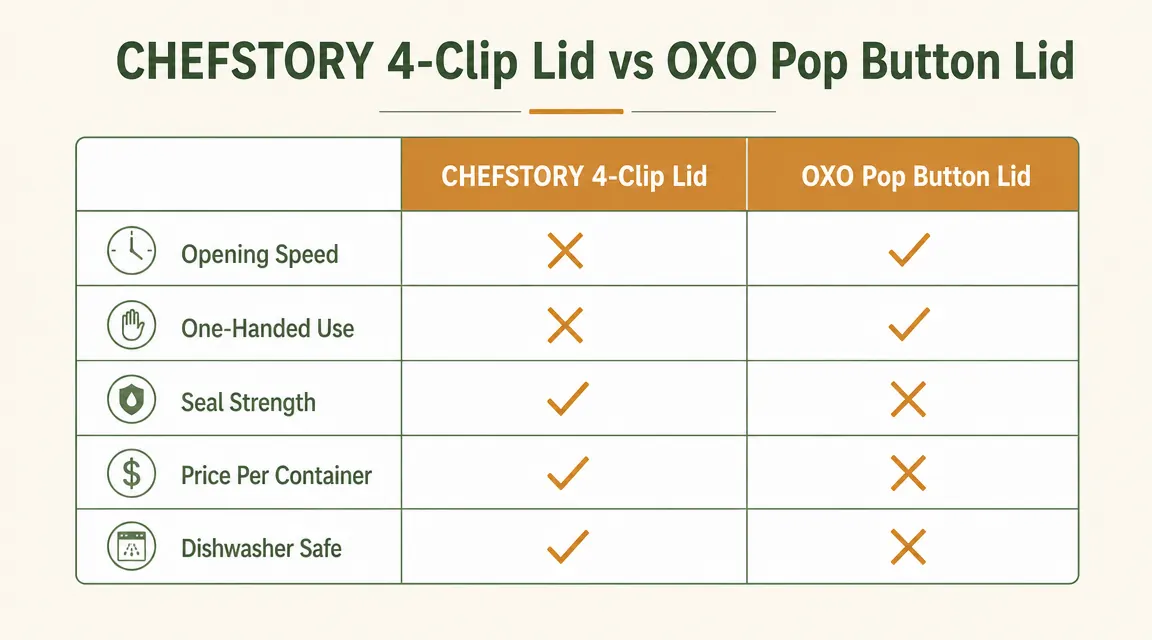
My mother bakes bread two to three times a week. Her experience with the CHEFSTORY containers was more negative than mine, and it came down to one thing: you cannot open these containers one-handed. When you are mid-bake and your hands are coated in flour, you need to be able to grab a canister, open it, measure what you need, and close it again without stopping to wipe your hands. The OXO Pop button lid is designed for exactly this. One clean press with a single knuckle and the lid pops open. The CHEFSTORY four-clip system requires you to flip each of four small clips outward before the lid releases. That means clean hands, or at minimum a hand wipe, every time you need to open the container.
She returned her set after two weeks. Not because the containers are bad, but because her specific use case, active baking where the containers open and close multiple times during a single cooking session, is exactly the situation where the lid friction matters most. If you bake regularly and your containers are in constant rotation during active cooking, the four-clip lid is genuinely more friction than the OXO Pop design. For a detailed breakdown of how these two compare on seal strength, price per container, lid ease, and what each one gets right, see my comparison: CHEFSTORY vs OXO Pop Containers.
What I Liked
- Airtight seal is real and effective when all four clips are properly engaged
- Clear walls let you see fill levels from across the kitchen without touching the container
- Square footprint fits significantly more storage capacity per linear shelf inch than round canisters
- Wide mouth opening makes decanting from bags and boxes reasonably clean
- Price for all eight containers makes it accessible to commit to a full pantry conversion at once
- Silicone gasket is removable for hand-washing to extend its life
Where It Falls Short
- Four-clip lid requires two hands and individual clip engagement every open and close
- Listing does not explain the clip mechanism, so many first-time buyers think the product is broken
- Some units arrive with one clip that has noticeably less tension than the other three
- Gasket can deform if run through a dishwasher with a high-heat drying cycle repeatedly
- Container sizes do not match standard bulk grocery bag sizes without portioning
- Small containers in the set (two of the eight) have limited use cases for most pantries
Who This Is For
CHEFSTORY containers make the most sense if you want to convert your pantry shelf from bags and boxes to a uniform, clearly labeled canister system in one affordable purchase, and your cooking style is mostly prep-time or once-daily cooking rather than active baking. If you open each container once, scoop what you need, and close it, the four-clip lid adds maybe five extra seconds per open. Over time that becomes automatic. The visual clarity, the airtight seal, and the shelf organization payoff are real. If you go in knowing the lid works differently than expected, the product delivers on its core promise.
Who Should Skip It
Skip CHEFSTORY if you bake multiple times a week and your containers will be opening and closing constantly during active cooking sessions with floury hands. Also skip it if you want a fully dishwasher-safe set where you can throw everything in together including gaskets without thinking about heat settings. And skip it if you primarily buy pantry staples in 5-pound or 10-pound bulk bags and want containers that hold an entire bag without portioning. The CHEFSTORY size range is calibrated for typical household cooking quantities, not bulk storage. For those use cases, the OXO Pop system or a purpose-built bulk canister set will serve you better even at higher cost.
Know what you are buying. The lid takes fifteen seconds to learn and then the system actually works.
CHEFSTORY 8-piece airtight canister set. Four sizes, clear plastic, square footprint. 4.6 stars across 6,600+ Amazon reviews. Read the lid instructions before filling and this set will do exactly what it promises.
Amazon Check Today's Price on Amazon →