
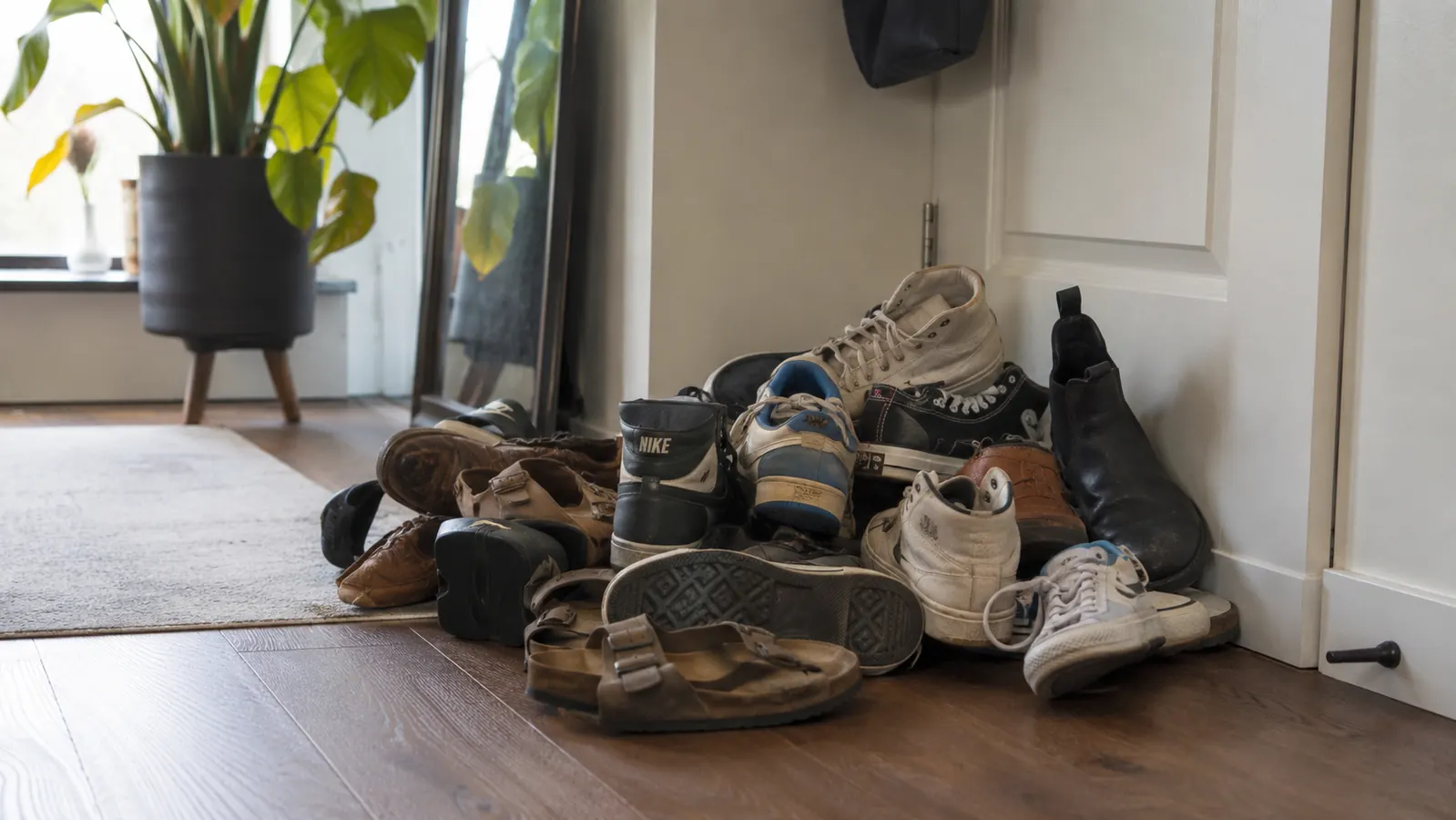
For three years the shoes lived on the floor. Not in a rack, not in a basket, not in any of the clever solutions I kept pinning and never buying. Just a pile. Six pairs minimum on any given Tuesday: my running shoes, my everyday sneakers, my partner Marcus's work boots taking up a full 14 inches of entryway real estate, two pairs of flip-flops that somehow multiplied every summer. Guests would step over them. I would step on them. The pile was just a fact of the apartment, like the radiator that clanked at 3 a.m. The thing that finally fixed it was an Amazon Basics over-the-door hanging shoe organizer with 24 mesh pockets.
I tried a floor rack first. Bought a two-tier chrome one for $18. The problem was it took up the same footprint as the pile, just in a slightly more organized configuration. We still had to shuffle past it to get to the door. I tried a wicker basket. The basket filled up in a week, then the overflow started piling beside the basket. The basket became a symbol of failure. I donated it.
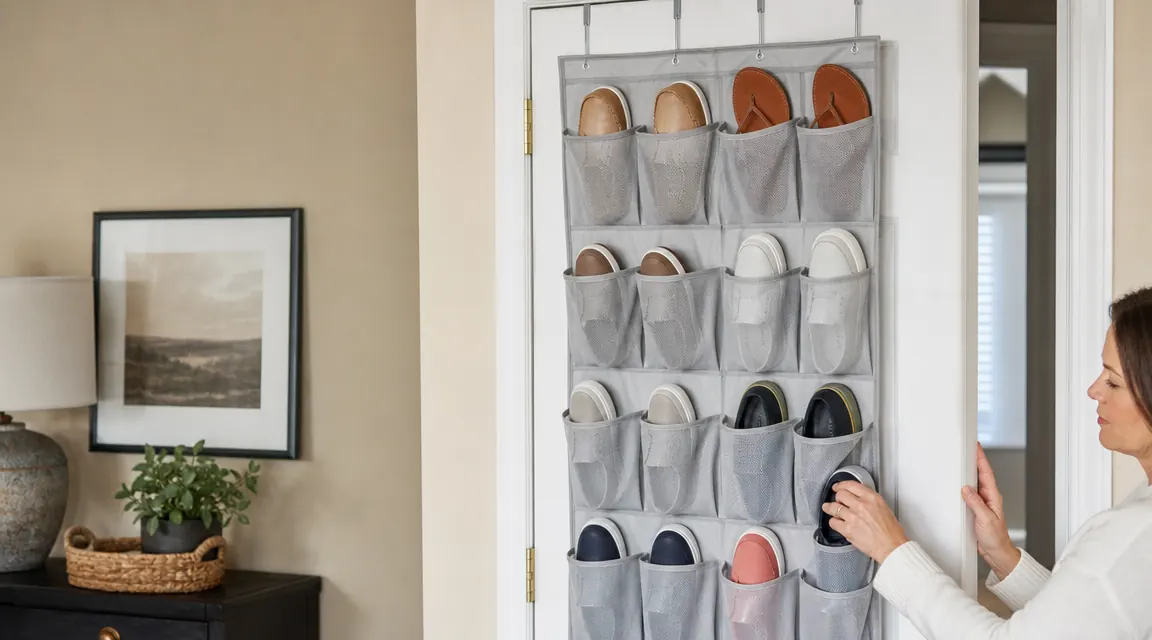
The thing nobody tells you about small entryways is that you cannot organize your way out of a floor-space problem using solutions that live on the floor. My entryway is 36 inches wide and about 48 inches deep before you hit the coat closet door. That is it. There is no bench footprint I can afford, no cubby unit that fits, no mud room hiding around the corner. The only dimension I had left was the door itself.
I bought the Amazon Basics 24-pocket mesh over-door organizer on a Wednesday afternoon. The current price on Amazon sits right around ten dollars. I had been skeptical of the mesh pocket style because I assumed the pockets would sag or the hooks would scratch the door. But 32,000 reviews have a way of wearing down skepticism. I added it to my cart mostly out of exhaustion with the pile.
The only dimension I had left was the door itself. Everything else was already spoken for.
If your entryway floor is also a shoe storage solution right now, this is the fix.
The Amazon Basics 24-pocket mesh organizer hangs on the back of any standard interior door with two metal hooks, no tools, no drilling. 24 pockets fits a full household worth of everyday footwear. Around $10.
Amazon Check Today's Price on Amazon →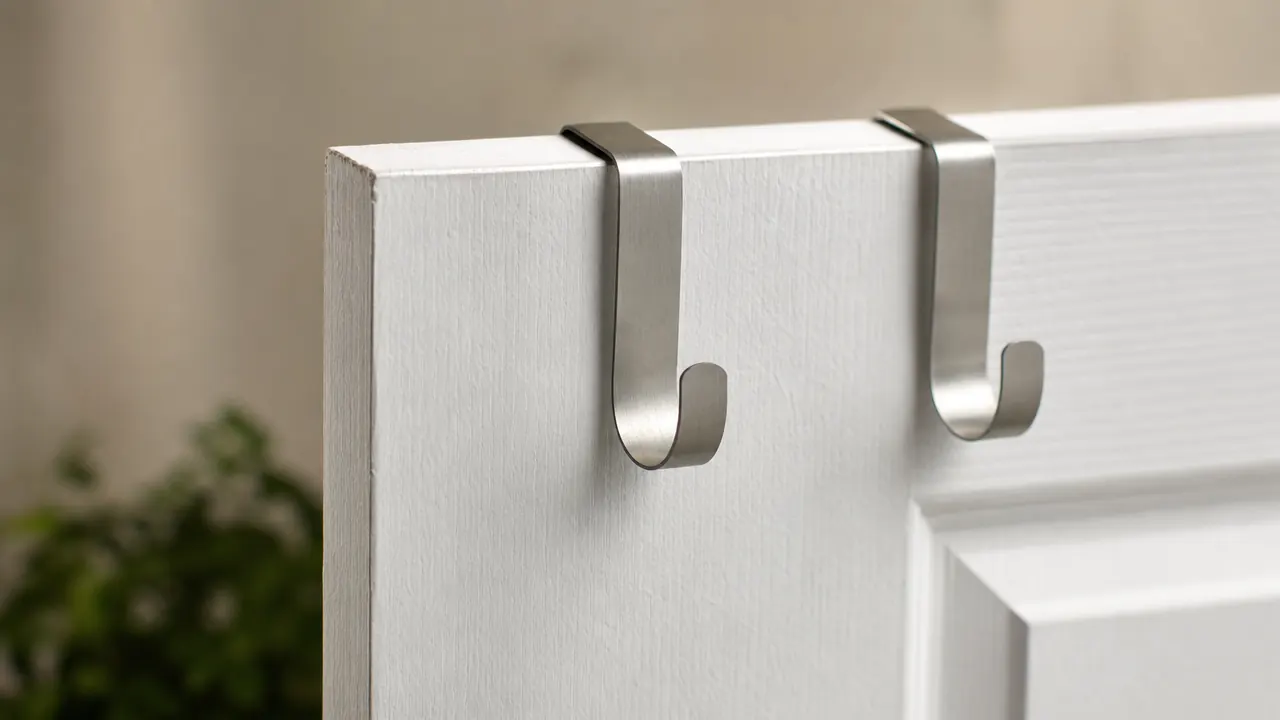
It arrived Thursday. The install was genuinely ten minutes, and I am including the time I spent reading the included instruction card, which I did not actually need. Two metal J-hooks loop over the top of the door. The organizer hangs from those hooks. That is the entire mechanism. The hooks are padded with a thin rubber coating so they do not scratch the door finish. My door is a standard 1.75-inch hollow-core interior door and the hooks fit without any adjustment.
The 24 pockets are arranged in six columns of four rows. Each pocket measures roughly 5 inches wide by 5.5 inches tall, which fits sneakers up to about a men's size 11. Marcus's size 12.5 work boots do not fit in a single pocket, so those go on the closet floor where they always went anyway. But every other pair in the apartment fits. My running shoes, two pairs of flats, a pair of sandals, my house slippers, his everyday sneakers, his gym shoes. That is ten pairs. The remaining 14 pockets hold things I did not expect to put there: an umbrella folded flat, the dog's leash, a small basket of spare keys. Bonus storage I did not plan for.
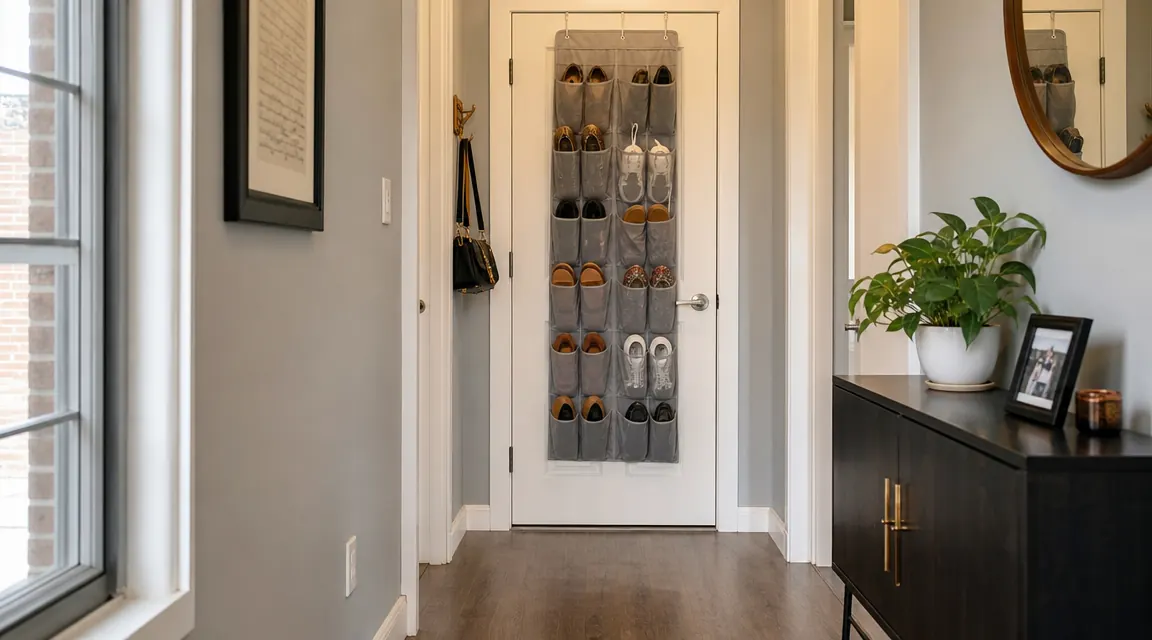
The floor was clear by Thursday evening. I stood in the entryway for a moment and just looked at it. It sounds dramatic but it was the first time in three years I had walked through that door and not had to immediately look down. The space felt wider. It measured the same 36 inches it always had, but without the pile anchoring your eye to the floor, you look straight through to the living room instead.
One honest note: the mesh is not heavy-duty. It is the same lightweight polyester you see on the back of a car seat organizer. After about nine months, the two bottom-row pockets on my organizer developed a slight forward sag because I kept putting heavier ankle boots in them. The solution was simple: keep heavier shoes in the top three rows where the weight distributes closer to the hooks. The pockets in the upper rows have shown zero wear. If I were advising someone installing this today, I would tell them: light shoes and slip-ons go on the bottom, heavier footwear goes in the middle and upper rows.
What I'd Tell You If We Were Sitting at My Kitchen Table
If you have a floor-pile situation and a door you can use, just buy this one. Not a fancier version with pockets, not a linen one with a higher price tag. This one. It is $10, it installs in ten minutes, and it holds 24 pairs. The only reason to buy a different product is if your door situation is unusual, if you have mostly oversized footwear, or if you are renting somewhere that prohibits anything hanging on doors (which almost no standard lease actually does, since the hooks cause zero damage). For a standard apartment entryway with a standard interior door, the Amazon Basics organizer is the correct answer. I have now moved it through two apartments and it survived both moves intact. The hooks have not bent. The stitching has not pulled. For the price of a takeout lunch, the entryway pile is gone.
The pile on my floor is gone. Yours can be too, for around ten dollars.
Amazon Basics 24-pocket mesh over-door shoe organizer. Two hooks, no drilling, fits standard interior doors. Over 32,000 reviews and counting.
Amazon Check Today's Price on Amazon →